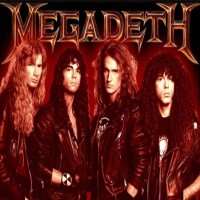
As the "classic" line-up fragmented in the late 90s, Megadeth found themselves at a crossroads going into the millennium; do they continue to chase success by straying further from their roots, or return to a sound that had spent much of the 90s underground. To say the late 90s and early 00s were unstable times for the band is an understatement (which is saying something, as the band were never the posterboys for stability at the best of times). Yet what is a legendary career without a redemption arc? After a brief break-up, Megadeth underwent another metamorphosis that saw the band get firmly back on track and continue to blaze a path to this day.
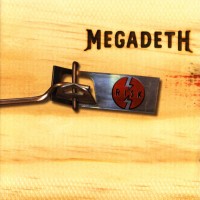


Now, say it with me people, controversial opinion time; while many rush to label Risk as the band's worst effort, I wouldn't label it that at all... if only by virtue of two other records crashing and burning harder, rather than by any inherent saving grace of quality on Risk. Risk branches out from its roots, or rather, it is a tree in a whole other forest... on another continent. This in and of itself isn't what makes Risk bad; hell, if you only listen to metal and not other types of music, you are missing out big time. No, what makes Risk bad is just how boring it is. "The Doctor Is Calling" alright, but if this is the doctor's cure for boredom, then bag 'em and tag 'em now, it's DOA.
OK, when the band attempt to inject some entertainment value into proceedings, it produces moments of enjoyment, from the kumbaya moment of "I'll Be There" to the haunting "Ectasy", and, whisper it quietly, but "Crush 'Em" is actually quite fun (cheesy? Certainly). The rest of the album? It's middling at best or downright boring at worst. "Prince Of Darkness" is broody, but goes nowhere after it crescendos out of its extended intro, "Wanderlust" takes too long to get to its payoff, and "Insomnia" is so middle-of-the-road it gets hit by both sides of traffic.
The 90s may have ended, but the band's troubles certainly hadn't.
2000s
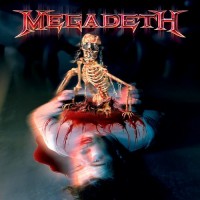

Oh, The World Needs A Hero is a step in the right direction, it's just one made with little-to-no conviction or apparent enthusiasm, and oh boy, does it show. With the classic line-up now just another entry into the extensive "members" section on Wikipedia, the lack of personality in this edition of the band resonates louder than the music they put out.
Sure, the band are on the right path at least, with The World Needs A Hero back to its metal roots, but much like many groups who had survived the 90s, they would find that the early 2000s weren't exactly fertile grounds for them either (with a few exceptions). When The World Needs A Hero gets its act together, it can be enjoyable, with the opening "Disconnect" raising hopes (before the following title track shows there is still plenty of leftover cheese from Risk hanging around) and, if you hang around long enough, the "Warhorse" part of "Recipe For Hate... Warhorse" and the conceptual sequel to “Hangar 18”, "Return To Hangar", will at least stop this album being a total write-off ("Dread And The Fugitive Mind" is a solid track, but it had already been released on Capitol Punishment: The Megadeth Years, so the band were scraping the barrel by including it here).
Not quite the nadir of Megadeth, it doesn't even have the excuse that Risk had, that it was Megadeth plying their hand at something that wasn't their style or strength. "1000 Times Goodbye" is boring mid-pace filler, "When" is nigh-on plagarism and "Moto Psycho" is ironically a pedestrian effort, yet none of them feel outside of the band's wheelhouse in terms of style.
With the band breaking up soon after due to an unfortunate injury to Mustaine's arm that would sideline him for years, the history of Megadeth would have ended up on one hell of a whimper if this did prove to be the end.
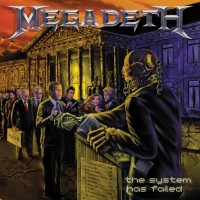
After successfully recovering from his career-ending injury, a recovery that involved having to re-learn guitar again, Mustaine sought to put out a solo album before record label politics dictated that The System Has Failed would be put out under the Megadeth name. With The System Has Failed marking the first time that Mustaine was the sole remaining original member left (though technically Chris Poland appears on the album), it marked a whole new chapter in the band's history, and one that was thankfully looking up.
While not fully riding the resurgent metal wave of the mid-2000s, The System Has Failed ironically sees Megadeth start to find their identity again after years where they seemed either lost in experimentation or disingenuously trying to tap back into their roots. The System Has Failed has its moments, although the album is mostly front-loaded, raising expectations that the second half cannot match by comparison. Had The System Has Failed been an EP containing the first four tracks and "Back In The Day", it would rank among some of the band's best work, with "Kick The Chair" and the aforementioned "Back In The Day" being some of the best retro-thrash callbacks of the mid-00s, while "Die Dead Enough" and "The Scorpion" have an infectious groove that will stick with you long after the album has finished.
It's a shame, then, that the rest of the album either rides the tedium of middling metal ("Of Mice And Men") or outright boring a la "My Kingdom" & "Tears In A Vial". Just pretend the album ends after "Back In The Day" and save your time.
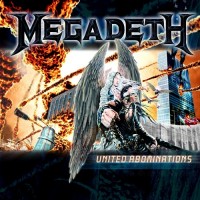
While The System Has Failed was the sound of Megadeth finding their feet again following their temporary disintegration and a poor run of albums, United Abominations was the sound of the band taking steps in the right direction. Their first release for Roadrunner Records, and with some resemblance of stability with the line-up (well, by 'Deth standards anyway) for the first time in a while, it is reflected in the quality of the material. United Abominations isn't the complete article, though it is the first album in too long a time where the skip button isn't mandatory.
Kicking off with perhaps the most potent track in years with the roaring "Sleepwalker", the album has an air of self-belief and attitude that is refreshing. With cuts such as "Washington Is Next!" and "Burnt Ice" among its ranks, there is plenty for you to sink your teeth into. Chief among the tracks, however, are "Never Walk Alone... A Call To Arms" and "Prey For Blood", two overlooked gems in the band's latter-day catalogue.
Not all was a step in the right direction, however; the substitution of Lomenzo in place of Ellefson only served to highlight how underrated Ellefson had been all these years, with the reduced and less adventurous bass work on "Blessed Are The Dead" among others serving as evidence of a noticeable, and regrettable, absence.
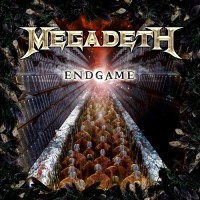
Far from living off former glories, Endgame saw Megadeth release an album that ranks amongst their best work across their long career. The momentum had been building since their return, and the addition of Chris Broderick proved to be the X factor that helped elevate Megadeth from releasing good records to classic ones.
From the tour de force "This Day We Fight!", Endgame spans full-tilt thrash to more mid-tempo tracks, managing to imbue both with power and personality that all hit just as hard. "Head Crusher" is an instant adrenaline hit, while "How The Story Ends" draws in you in with its guitar work and melody. The gritty and razor-sharp tones achieved across this album highlight just how good Mustaine and Broderick are, with the opening "Dialetic Chaos" and "Endgame" being essential listening for fans of the six-string.
Things were looking up once more, as the band hit top speed and ploughed through any lingering doubts fans may have had. What could go wrong?
2010s
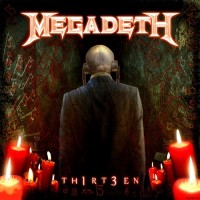
Coming out around the time of The Big 4 shows alongside the return of Ellefson on bass, Th1rt3en should have been the crowning glory at time when Megadeth were riding higher than they had been in a long time. What fans got, however, was an album that felt disjointed and unfocused... because it was. With the album proving a swansong on Roadrunner Records, a relationship that Mustaine had soured on, what you have in Th1rt3en is an album that was made out obligation rather any kind of celebration.
Compromised of old re-worked material ("Millennium Of The Blind", "New World Order" and "Black Swan"), tracks released for video games ("Sudden Death", "Never Dead"), as well as a few new tracks ("We The People"), the album just feels thrown together rather than constructed with much care or attention.
Th1rt3en is a pedestrian effort for the most part, with tracks like "Wrecker" and "Fast Lane" phoning in the thrash while "Whose Life (Is It Anyway)" and the aforementioned "We The People" being mediocre metal by the numbers. The band do at least turn in good performances, but what good is that when the result is a song like "New World Order"?
There are some good tracks to be found, with the opening "Sudden Death" (a track recorded for Guitar Hero), "Guns, Drugs & Money" and "Black Swan" showing the band could still produce solid material when they wanted to.
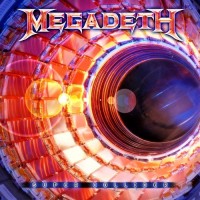
Breaking free from Roadrunner Records and getting their own label imprint, Tradecraft Records, Megadeth marked the occasion by releasing one of their worst albums to date. Super Collider sees the band fumble the ball in almost comical fashion; be it Mustaine seemingly forgetting how to write an aggressive track ("Burn!" & "Built For War"), how to sing without sounding like fingernails on a chalk board ("Super Collider"), or the band producing songs with little of interest within its contents ("Dance In The Rain"), Super Collider is a smorgasbord of bad ideas combined into one boring package.
The compressed and constrained production hinders what potential some songs have ("Kingmaker"), leaving them with an unnatural and compact sound. Perhaps the easiest way to sum up how bad things are, the highest point is the pedestrian Thin Lizzy cover, "Cold Sweat", one that sounds like a neutered facade of the original.
Whereas Risk and The World Needs A Hero at least had one or two tracks worth picking out of the rubble, Super Collider marks the one time that an album is best left to smoulder away fully undisturbed.
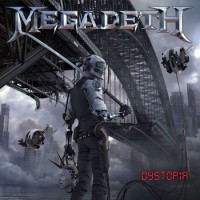
Credit has got to be given to Mustaine: he has a solid track record of recovering from self-inflicted disasters. The latest example of Megadeth putting themselves back on track after derailment, Dystopia is a solid effort and their strongest since Endgame. Joining proceedings would be none other than Chris Adler, whose tenure in the band may ultimately have been brief, but his impact huge by comparison.
With Mustaine now fully immersed in what can charitably be called conservative culture, it leads to some questionable lyrical content, but some of the most musically charged songs in years. Be it the switching groove of "Bullet To The Brain", the riff barrage that is "The Threat Is Real" or the slow burn of "Conquer Or Die", Dystopia is one of the more adventurous, yet reliably enjoyable, albums the band has produced in years to this point.
For reasons you can Google (although maybe not image search), this would prove to be the second, and likely final, swansong from Ellefson, who signs off with one of his strongest performances in years, thanks to tracks like "Fatal Illusion" and "Lying In State".
2020s
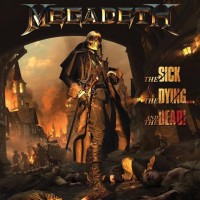
When you consider the adversity the band faced during the making of The Sick, The Dying... And The Dead!, (between Mustaine's battle with throat cancer, Ellefson's controversial departure, and a global pandemic), it’s amazing that they managed to put an album out, let alone one that as enjoyable as this.
While the youthful exuberance is long gone at this point, it is substituted with a solid songwriting maturity that produces standout cuts "Dogs Of Chernobyl", "We'll Be Back" and the title track. For having recently recovered from throat cancer, Mustaine puts in one of his strongest vocal performances in years. The revolving door of members continues unabated, as Steve DiGiorgio steps in on bass, Loureiro plays his swansong and Verbeuren debuts behind the drumstool (props must be given to Mustaine for somehow maintaining a semblance of sonic continuity, despite his proclivity to swap members like shirts).
While the album does fall into filler territory more often than you'd like, nothing outright makes you want to turn off your record player.

Who would have thought all those years ago that Dave Mustaine would be one of the lucky ones and get to go out on his terms? It's unfortunate, then, that this opportunity is largely squandered, with an effort that often seems devoid of effort, feeling like a modern Th1rt3en in this regard.
Much of the album is filled with mid-paced tracks that offer little to hook you in, from rather pedestrian songwriting, to some of the worst lyrics Dave has penned. While you expect the youthful energy to not be there, the lack of experience to compensate is what hinders the album the most.
While the album has its moments thanks to the largely blink-and-you-miss-it period of Mäntysaari on guitar ("Let There Be Shred", "Tipping Point"), it is the closing tandem of "One Last Note" and the cover of "Ride The Lightning" that serve as the true highlights on the album, at least closing the book on a strong note.
They came, they saw, they conquered.
Additional content

A side project for Mustaine, featuring future 'Deth drummer Jimmy DeGrasso and, if you pick up the original album*, Lee Ving of Fear on vocals. While on paper this union should work, much of the album seems to trip over its own feet deciding if it wants to be a punk or metal album, leaving tracks with a facsimile of attitude of the former, and a watered down metallic attack. With that said, there are moments where it does sound like they strike the perfect balance, such as with "The Day The Music Died", "Voices" and "Nothing Is Something".
* The album was controversially re-mastered, replacing Ving's vocals with Mustaine's and omitting Ving's harmonica parts. If you can, seek the original as it is the better of the two.
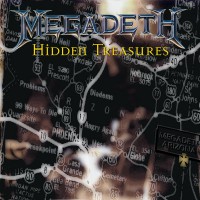
Remember the pre-internet age when you had to buy soundtracks or singles in order to have access to songs that weren't on studio albums? *shudders* dark times indeed. Hidden Treasures offered fans an easy way of collating these disparate efforts into one convenient collection, and one that is an enjoyable bonus, rather than mandatory listening. With that said, there are three tracks that make seeking out this EP worthwhile: the Alice Cooper cover (which, for trivia fans, is the only song the band released as a trio) "No More Mr. Nice Guy", the charged "99 Ways To Die", and the classic jewel in the crown "Angry Again". The rest of the EP, while not superfluous, is very much in the shade of these tracks: worth a listen only for curiosity's sake.
For those of you keeping count, (discounting MD.45 and Metallica) that's twenty-three members (who have appeared on album) across sixteen albums.
With Megadeth calling it a day and riding off into the sunset, they can look back on a storied career that has shaped the face of metal as we know it. Across sixteen albums, Megadeth have reached the kind of highs (and not just the chemical ones) that many bands strive for, but also endured the kind of lows many bands fear.
Now you have a guide on how to convert yourself into a fan, go catch them live while you can. I'll see you down the front, and we can share a beer as we hear one of the best bands in metal take to the stage one last time.