ADDITIONAL METAL-RELATED LISTENING
As you might have seen, the ‘60s were a hotbed for multiple genres, some of which had a hand in the formative years of metal, like psychedelic rock, blues rock, and garage rock. Not all albums of their kind I consider as mandatory as the ones I have picked in the first two sections, but those looking to expand their listening beyond the mandatory will find plenty here.

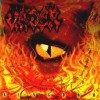
For a band that didn’t actually play metal, Coven (not to be mistaken for the thrash Coven) were the ones who made the biggest step thematically and bridged the gap between the darker tendencies that psych rock was already displaying and the full-on occult fascination that metal would later display. With a title that sounds like the headline of a conservative Satanic panic article, Coven were the real deal (I mean, Coven are the real deal, because I recently saw the band live, even if the vocalist is the only member left) because the band seemed to embody the occult satanic themes they sung about. Aside from the psych rock songs, the album ends with a recording of a satanic mass, and though it’s the one track I generally skip when listening to the album, you can thank it for all the black metal bands using Latin. You could arguably also thank it for the sign of the horns becoming popularized within metal. There are also a lot of parallels to be drawn with Black Sabbath, even if those were denied by Tony Iommi, with the opening track on Witchcraft Destroys Minds & Reaps Souls being called “Black Sabbath”, and the bassist’s nickname being Oz Osbourne. Though because the album was supposedly shelved soon after release and didn’t perform very well, prompting Coven to reroute to being a folk rock band (even scoring a hit), it wouldn’t be unfair to say that the band’s influence could be overstated retroactively. Even so, with all of our hindsight, there’s no band as occult as Coven in the ‘60s, and we can thank Jinx for being the stepping stone for women vocalists in psych rock between Jefferson Airplane and the current wave of occult doom rock like Blood Ceremony, Jess And The Ancient Ones, and Lucifer.
Standout tracks: “Black Sabbath”, “For Unlawful Carnal Knowledge”, “Choke, Thirst, Die”.
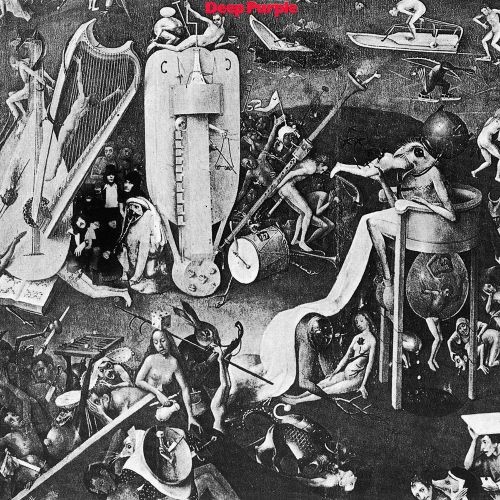
For most rock and metal fans, the history of Deep Purple begins in 1970 along with the Mark II lineup: In Rock was the band's breakthrough as far as our scene is concerned, with songs like “Child in Time” and “Speed King” providing the best retrospective demonstration of what the band could do for modern heavy music. But for there to be a Mark II, there had to be a Mark I. Before Ian Gillan and Roger Glover joined, the trio of Ritchie Blackmore, Jon Lord, and Ian Paice was complemented by vocalist Rod Evans and bassist Nick Simper, who together with that core instrumental trio spent three albums developing the foundations of their definitive style. This self-titled album, the third and final Mark I release, was the most successful: it has a higher concentration of original material, moving the band away from the Vanilla Fudge formula of transformatively slow and voluminous blues covers and toward a more unique personality marked by baroque and classical influence (e.g. “Blind”, “April”) and intrusive guitar leads (e.g. “Why Didn’t Rosemary?”). It's an excellent album for Paice, whose highly active drumming adds a considerable sense of motion and fullness to these songs; Blackmore and Lord each have a developing sense of boldness as well, stepping into the foreground with coarser tones and more personality than on the previous two albums. While the levels of distortion and sheer volume are not yet comparable to where In Rock would take them, and certainly nowhere near the freight train of Machine Head, this is the hardest sound of Mark I by a longshot, and its up-tempo jams of smashing percussion and carousing instrumental leads create a sense of chaos matched by even stronger songwriting. It must be admitted that Evans did not have the charisma or explosive volume of Ian Gillan – his delivery here is still cool and relaxed, a comfortable croon better suited for the psychedelic atmospheres and less caustic blues operations of Shades Of Deep Purple and The Book Of Taliesyn. He is not yet wholly incompatible with this still-growing style, however, and Deep Purple is on the whole a highly cohesive and engaging album with deep wells of instrumental inspiration (“April” remains one of the band’s most sophisticated compositions to date).
Standout tracks: “Chasing Shadows”, “Blind”, “April”.
by SSUS

You knew this one had to be here. There are a lot of bands that are known mostly for one song, and sometimes that song is also a cover, but very rarely is that one song the one often credited as the first heavy metal song. I wouldn’t go as far as to say that power trio Blue Cheer’s cover of Eddie Cochran’s “Summertime Blues” is undeniably metal, but it is heavy, loud, and distorted, more so than almost anything released up until this point (which is very early in the year). That is the heaviest song on the record and deserving of the attention it gets, but even if Vincebus Eruptum turns it down a little bit after its opener, there’s a lot of loud distortion to their psych/blues rock, a love of the amplifier fuzz that might’ve made Vincebus Eruptum a contender for a place in this article even without its flagship song, with plenty left to still feel like it would tie in to stoner and doom metal (some would say also grunge), a sound that would grow even thicker on followup Outsideinside.
Standout tracks: “Summertime Blues”, “Doctor Please”, “Second Time Around”.

Another very infamous case of a band being synonymous with one song, though in this case the title track of In-A-Gadda-Da-Vida being 17 minutes long does kinda make it not only a gargantuan tune, but also long-lasting enough to cover a couple of ordinary songs. It is quite ironic that it does make the album feel heavier than its literally titled predecessor, Heavy, though Side A is more in line with the material of that record, being acid rock with a slight psychedelic pop edge, and hearing Doug Ingle’s slightly goofy dramatic vocalisations in a more pop context after mostly being familiar with that one song is a bit of a shock. Side B, which hosts the title track, is, however, the reason why Iron Butterfly are often mentioned in the context of proto-metal, with the dramatism of Ingle’s vocals matched by the psychedelia of the spiritual-sounding organ and the gloomy bass line, plus the extended soloing that fills up the later parts of the song.
Standout tracks: “In-A-Gadda-Da-Vida”.

Steppenwolf - Steppenwolf (1968)
[Hard Rock]
Yes, yes, I know, but we’re almost done with the “known for one song” cases. Yes, Steppenwolf are known for other songs too, even though they’re on other albums. Yes, 1969’s Monster is the heavier and more interesting-as-a-whole album. Yes, I am fascinated by the fun fact that frontman John Kay was born in East Prussia when it was still part of Germany. The band’s self-titled debut straddles the line between blues rock and psychedelic rock in a way that feels more overtly hard rock, while still having songs leaning on either of the two, so there’s a chance that we’d talk about Steppenwolf in a proto-metal context either way, but it’s undeniable that they unknowingly etched their name in the metal canon with a simple line in their famous song “Born To Be Wild”: Kay singing the line “Heavy metal thunder” might be where the genre was christened. That line might’ve been enough, but the cheap synth sounds masked by guitar distortion and Kay’s husky vocals on it more than cemented the sound association.
Standout tracks:: “Sookie Sookie”, “Born To Be Wild”, “The Pusher”.

The Crazy World Of Arthur Brown - The Crazy World Of Arthur Brown (1968)
[Psychedelic Rock]
“I AM THE GOD OF HELLFIRE
AND I BRING YOU…”
Yes, bear with me with another “known for one song”. There’s something very telling that Arthur Brown has been around for a long time, owes most of his metal alumnus status to the song “Fire” (and not even as much to the song’s actual style but its shocking nature, something lost when only listening to the song and not seeing Arthur perform it with a burning crown and face paint), and he’s still performing at metal festivals like Prophecy Fest in the current age, which only solidifies his presence in this article. Yes, there’s more to the album of the man’s original band, another case akin to Alice Cooper where the original band and the solo career have (almost) identical names, and a lot of it is more soulful and jazzy, while still keeping some of that theatrical zaniness, like Screaming Jay Hawkins (there’s even a cover of “I Put A Spell On You”) fronting a funkier The 13th Floor Elevators, so for the entire context I’ll let ToddInTheShadows elaborate.
Standout tracks: “Fire”, “Time”, “I Put A Spell On You”

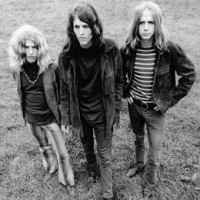
Even though this was released at the tail end of the ‘60s, there’s something unimaginably heavy about Sea Shanties that makes me surprised that this came out in the 1960s. Of course the raw production is in line with what’s expected of the decade, but there’s a denseness to the fuzz that makes the psych rock here feel heavy enough to warrant the “heavy psych” label, a doominess in the vocals that feels like an even more occult Jim Morrison, a unique sonic palette in how the violin is used in such a heavy rock context, and a jamminess that gives it a slight prog rock edge in its longer songs, making this an overlooked gem for both proto-metal and proto-prog. It’s perhaps not exactly heavy enough to be metal, in the same way that technically nothing before Black Sabbath was, but as far as proto-metal goes, it’s as heavy as the rest of them.
Standout tracks: “Futilist's Lament”, “Death Warmed Up”, “Missing Out”.

Gun - Gun (1969)
[Hard Rock]
When researching proto-metal and other early metal bands, some from the early ‘70s too, you’ll find plenty of very simple one-word band names. Bands like Rust, Dust, Crow, Bang, Jerusalem, Blast, Stray, Toad, and a lot of others I might forget right now. Gun is one of the earliest, early and heavy enough to fit in this category, with the band releasing two albums in 1969 before disbanding. The debut holds their most well-known song, opener “Race With The Devil”, a minor hit and a song that has later been covered by Judas Priest (this will be a repeating occurrence). The rest of the album is hard rock that’s psychedelic enough but not exactly psych rock, with its most striking quality is how orchestral it is, almost like it finds the band trying to score a movie.
Standout tracks: “Race With The Devil”, “The Sad Saga Of The Boy And The Bee”, “Take Off”.

The 13th Floor Elevators - The Psychedelic Sounds Of… (1966)
[Psychedelic Rock]
Ask anyone one defining genre of the ‘60s and if they have any interest in music they’ll have psychedelic rock in the top three. That’s a genre that evolved only in the latter half of the decade and had a huge explosion in 1967-1969, with a lot of that had its seeds planted in 1966. The Psychedelic Sounds Of The 13th Floor Elevators feels like a manifesto of psychedelic rock, one where the blues, folk, and garage rock sounds that had been circulating got distilled into something much trippier and effects-laden, one where the influence of drugs is explicitly stated in the liner notes, and one that specifically uses the term “psychedelic” to describe itself musically. A lot of its weird sound, even with the retrospect of already being familiar with psychedelic rock, comes from the use of electric jug as an instrument, and in the vocal performance of Roky Erickson, years before he became a landmark occult rock singer. A good contender for a watershed album to divide the ‘60s into “before” and “after”.
Standout tracks: “You’re Gonna Miss Me”, “Reverberation (Doubt)”, “Thru The Rhythm”.

The Yardbirds - Having A Rave Up With The Yardbirds (1965)
[Blues Rock]
Wanna know another possibly even better contender for a watershed album? The Yardbirds are perhaps better known for the impressive roster of guitarists they sported in their short existence: Eric Clapton, Jeff Beck, and Jimmy Page. The last reformed the band as a version that would eventually become Led Zeppelin. Needless to say, The Yardbirds are known more for being the original band of other artists rather than for their own music, which is at first glance more conventionally mod / blues rock / British R&B, not too far a cry from what The Rolling Stones were doing. Having A Rave Up With The Yardbirds was released after Beck replaced Clapton, though it’s only the studio-recorded Side A where that’s the case, with Side B being a live recording with Clapton. The difference between the two makes it clear why Having A Rave Up could be considered a watershed moment, with its experimentation setting the stage for the psychedelic rock wave to come, both in its guitar sounds and in its echoey production, and I’m sure there’s a lot that can be pinpointed to Side A of this record. Side B is good but it really does feel like a different record.
Standout tracks: “Evil Hearted You”, “Still I'm Sad”, “Train Kept-A-Rollin”.

The Sonics - Here Are The Sonics!!! (1965)
[Garage Rock]
If you ever think there's supposed to be a missing link between the rock ‘n’ roll of the ‘50s and the proto-punk of The Stooges, that’s where garage rock comes in. The Sonics were formed in 1960, and while they’re technically still active today with only one original member left, they still had a pretty intact lineup for their 2015 album, and nobody in their 70s should sound like they have that much energy. But in 1965, hot off a line of singles that included renditions of classics like “Louie, Louie”, they released their debut, Here Are The Sonics!!!, it’s the kind of album that fully deserves its triad of exclamation marks. Imagine the piano playing and excited screaming of a Little Richard song but played with twice the distortion and with wilder drumming. The album, like most of its time, is an assortment of originals and covers, with the covers being the ones leaning more towards rock ‘n’ roll and the originals leaning more towards what would become punk. With all songs being in the 2-3-minute range, it’s like it predicted punk’s penchant for the shorter runtimes.
Standout tracks: “Witch”, “Psycho”, “Strychnine”.

Monks - Black Monk Time (1966)
[Garage Rock | Experimental Rock]
Garage rock can often be a rowdier version of rock n’ roll, punk before punk, but it often thrives in simplicity. The Monks’ take on it was much weirder, though, taking that simplicity and making it more rhythmically repetitive in a way that felt hypnotic, almost like a seed planted for krautrock, with a vocal performance that’s more snarky and satirical than rowdy. With its members going all-in on the monk gimmick, getting monk haircuts and performing in black monk attire, it felt like the band was purposefully being anti-commercial, and that’s reflected in the music. There’s a lot about Black Monk Time that makes it such a uniquely weird album, from its all-rhythm melodies to that specific organ tone, from the electrified banjo to the satirical lyricism, and all of that makes it the rare kind of album that’s an influence to both punk and experimental rock bands.
Standout tracks: “Monk Time”, “I Hate You”, “Complication”.

MC5 - Kick Out The Jams (1969)
[Garage Rock]
“I give you a testimonial: The MC5!” It’s no surprise that Detroit ended up being such a hotbed for loud, confrontational music, from the aforementioned Stooges to Alice Cooper; it feels like it was a city where the flower power of the hippie movement didn’t catch on as much. Bottling up that rebellious side of the counterculture were MC5, short for The Motor City 5. Taking the sound of garage rock, infusing it with the squealing sound of free jazz, and making it even louder and rowdier and angrier at the machine, they created a proto-punk sound bold enough to skip the studio phase entirely for their debut album. Recorded over Halloween night 1968, Kick Out The Jams kicks out with a “warm-up” by the band’s spiritual advisor, Brother J.C., asking the crowd whether they wanna be part of the problem or part of the solution, with that somehow being a less controversial move than the profanity of “right now it's time to... kick out the jams, motherfuckers!" from the title track. For such a loud, raw, high-energy, and in-your-face album, it’s no surprise that its attitude eventually seeped into metal and not just punk.
Standout tracks: “Kick Out The Jams”, “Rocket Reducer No. 62 (Rama Lama Fa Fa Fa)”, “Motor City Is Burning”.

Grateful Dead - Live / Dead (1969)
[Psychedelic Rock]
Yes, I could’ve gone with either Anthem Of The Sun or Aoxomoxoa, both great albums in their own rights that I recommend, but picking a live album from Grateful Dead isn’t just a compromise, but a statement about the fact that the reputation of the band’s live shows precedes them. Out of all the psych rock bands, only one of them managed to be credited as the pioneers of the “jam band” with their use of live improvisation, only one had their fanbase get its own name, with many “Deadheads” being dedicated enough to follow the band on tour through multiple concerts, and don’t get me started on the enormous amount of live albums, bootlegs or otherwise. Live / Dead gets its laurels for being contemporary rather than retrospective, and for being the first official live record from the band, and for being the first live rock record to use 16-track recording. Though it’s a compilation of various recordings at various concerts, it doesn’t feel disjointed, though if someone would prefer a singular performance from this era, the retrospective Live at the Fillmore East 2-11-69 would be my pick. As far as Live / Dead is concerned, I’d say it captures much of what made The Dead such a live phenomenon, even with more than five decades of jam band since then to account for.
Standout tracks: “Dark Star”, “St. Stephen”, “Death Don’t Have No Mercy”.

Vanilla Fudge - Vanilla Fudge (1967)
[Heavy Psych]
I’m not usually fond of cover albums, even in this decade where having your album be full of covers is more commonplace. There are Vanilla Fudge albums that are more focused on original material, like 1968’s Renaissance, even though covers were always a huge part of their albums. So if we’re going for a covers-focused thing, it rarely gets more transformative than how Vanilla Fudge took a couple of contemporary now-classics, slowed them up, and made them more dramatic and doomy with a strong organ-focused sound and vocal harmonies that somehow made them feel much heavier and more tortured. The organ is especially central here, played by Mark Stein, who was influenced by The Rascals’ Felix Cavaliere’s organ playing, and in turn served as a huge influence on Deep Purple’s Jon Lord. The rest is Metal History 101.
Standout tracks: “Ticket To Ride”, “She's Not There”, “You Keep Me Hanging On”.

Fleetwood Mac - Then Play On (1969)
[Blues Rock]
Before Rumours, before either Stevie Nicks and Lindsey Buckingham joined the band, Fleetwood Mac initially started out as a blues rock outfit led by Peter Green, hence why the band’s debut album is sometimes referred to as “Peter Green’s Fleetwood Mac”. Then Play On is probably the best album from this era of the band, their last with Peter Green at the helm, having him share vocal duties with new member Danny Kirwan. The album is a tad more expansive than the previous two, having the bluesier sound complemented by more folk and psych moments. Further re-releases also include songs recorded around the same time that didn’t make the initial cut, like the two-part “Oh, Well”, which included pianos by both previous member Jeremy Spencer and future member Christine McVie, and “The Green Manalishi (With The Two Prong Crown)” known not only for being the last song that Green recorded with the band but also for later being covered by a little band called Judas Priest.
Standout tracks: “Coming Your Way”, “Rattlesnake Shake”, “The Green Manalishi (With The Two Prong Crown)”
Spooky Tooth - Spooky Two (1969)
[Blues Rock]
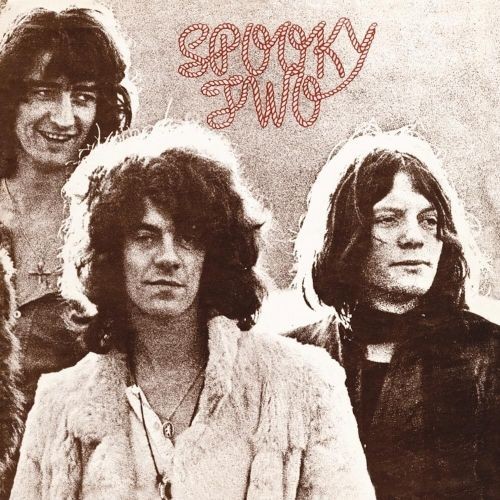
Even though Spooky Tooth is primarily a blues rock band, in good company among other British ones, they do stand out for a couple of reasons. The first is that an early incarnation of the band, The V.I.P.’s, played R&B and, even more relevantly, that turned into the band Art, which played psychedelic rock. There’s a lot of that that translated into Spooky Tooth’s blues rock sound, with a gospel touch in the keyboards and the backing choirs, and a dash of psychedelia in the guitar’s fuzz. But, appropriate for a band with “spooky” in its name, they can often take those sounds in a somewhat darker direction, giving it a slight occult touch. Spooky Two is primarily known among metalheads for hosting the original version of “Better By You, Better Than Me”, later covered by Judas Priest. There’s also a long and heavy cover of a song called “Evil Woman”, though a different song than the one that Black Sabbath covered a year later. The band later got asked to be the backing band for an experimental electronic artist, but when that album got promoted as the next Spooky Tooth, it expectedly killed the band, and though incarnations of it still popped up and released worthwhile stuff, nothing touched the chemistry they had on Spooky Two.
Standout tracks: “Evil Woman”, “Lost In My Dream”, “Better By You, Better Than Me”.

Grand Funk Railroad - Grand Funk (1969)
[Hard Rock]
First up, this album was released on the 29th of December, 1969, so it barely makes it through as a 1960s album, but I can’t argue with the technicalities. Second up, the name is false advertising as the band doesn’t play funk. Or anything too close. However, just like in funk, the bass here is absolutely delicious, bassist Mel Schacher a lot of times playing that bass like it’s a lead. Grand Funk Railroad might not be the heaviest or the most eclectic of rock bands, but there’s something about how the power trio makes each of the three members have a huge share of how good the songs sound, and there’s something very charming about the simplicity of that formula, even in the times where it can get a bit sloppy.
Standout tracks: “Got This Thing On The Move”, “In Need”, “Inside Looking Out”.

By 1969 it was still early enough in Jethro Tull’s career for them to not have developed in the progressive rock behemoth we know them as. 1968’s This Was mostly blended blues, folk, and jazz in a rock formula that felt like a band still trying to find their footing. Stand Up pushes the rock side further into hard rock and gives the flute a lot of shine in the folkier moments, and there are plenty of songs on it where they become more recognizable as the band that would go on to record Aqualung in how great the performances are, making it both a transitional record and a really great collection of heavier blues/folk rock tracks with Ian Anderson’s trademark flute and vocals. A lot of attention has been retrospectively given to this album because of allusions that “Hotel California” has used “We Used To Know” as inspiration, and listening to the latter definitely evokes the former, though I doubt I’d have ever made the connection myself.
Standout tracks: “A New Yesterday”, “Nothing Is Easy”, “We Used To Know”.

Santana - Santana (1969)
[Latin Rock]
We’re later going to talk about how certain Latin American genres took influence from jazz and rock music, but in the opposite direction there’s the sound of pysch/blues rock taking influence from Afro-Latin sounds. Santana, led by the eponymous guitarist Carlos Santana, was one of the first cases of this “Latin rock” sound. There’s certainly a lot of the usual California late-’60s sound in it, especially in the organ sounds, but then that’s contrasted by the congas in the percussion especially, and at this point I think we associate the sound of Carlos Santana’s guitar with Latin music because of his work rather than because of any inspiration he might’ve taken from Latin music, as it often sounds more in line with the emerging jazz-fusion sound. Half the album is led by Gregg Rolie’s (who went on to co-found Journey) vocals, while the instrumental songs are the ones where the Latin influences really get to shine. Later editions of this album also include a live recording of the band’s performance at Woodstock, which took place in between the album’s recording and its release. The entire run from the band into the mid-’70s is top-tier jazz fusion, and it’s still funny how Santana ended up being such a mainstream name decades later.
Standout tracks: “Evil Ways”, “Jingo”, “Soul Sacrifice”.

The Moody Blues - Days Of Future Passed (1967)
[Progressive Pop]
Having previously been an R&B band singing covers, The Moody Blues were asked by their label to record pop covers with an orchestra. Having just gone through some lineup changes and disillusioned with the inauthenthicity of playing covers, what the band did instead was create one of the first concept albums, one centered around a day in the life of an ordinary man, and one that used the orchestra about as much as it used band instrumentation, in which the Mellotron takes an important role, too. Though the album ended up being overshadowed by the success of the “Nights In White Satin” single, it did prove to be a landmark release both for the band and for the progression of progressive rock as a whole, especially the symphonic prog variant. Days Of Future Passed itself might be too mellow to be considered “rock”, hence why I tagged it as progressive pop, but both the band and the genre itself would develop closer to the rock sound in time.
Standout tracks: “Lunch Break: Peak Hour”, “The Afternoon: Forever Afternoon (Tuesday?): (Evening) Time to Get Away”, “The Night: Nights In White Satin”

The United States Of America - The United States Of America (1968)
[Psychedelic Rock | Experimental Rock]
To drive home the point that the ‘60s were fertile ground for innovation and experimentation, here’s a band literally called The United States Of America, whose only album is one of the weirdest pieces of psychedelic rock out there. For one, there’s the irony of the band name combined with the leftist lyrics, then there’s the fact that there’re no guitars on the record (well, bass doesn’t count). What The United States Of America replace them with is a combination of electric violins, electric harpsichords, organs, and, if the term “electric” didn’t make it clear already, a groundbreaking amount of electronica. There are a lot of comparisons to Pink Floyd and The Velvet Underground, and to the Silver Apples album that was released a couple of months afterwards, but there’s something unique in its sound palette and in Dorothy Moskowitz’s vocals that remind me more of something like Stereolab than anything from the ‘60s.
Standout tracks: “Hard Coming Love”, “Cloud Song”, “Garden Of Earthly Delights”.

Fairport Convention - Liege & Lief (1969)
[Folk Rock]
Folk rock had already been quite a huge part of the 1960s at this point, though most of it had been the Bob Dylan-inspired American counterpart of acts like The Byrds, The Band, or Buffalo Springfield. That’s the style that Fairport Convention initially went for, though they did already start phasing it out in favour of more traditionally British folk tunes. By Liege & Lief, the passing of their original drummer and subsequent lineup changes led to them embracing a fully fiddle-heavy British folk-inspired sound, one that was still stylistically embracing a rockier side while being rooted, whether by rearranging older traditional songs or by writing new songs in the style, in British folk. Alongside other acts like Pentangle, Strawbs, Magna Carta, and arguably also Jethro Tull, Fairport Convention were responsible for imbuing British folk into rock’s DNA, which led to both the neofolk movement that the UK had in the ‘80s with acts like Current 93, Sol Invictus, and Death In June and eventually to Skyclad becoming the first folk metal band.
Standout tracks: “Matty Groves”, “The Deserter”, “Tam Lin”.

The Pretty Things - S.F. Sorrow (1968)
[Psychedelic Rock | Rock Opera]
The concept of the “rock opera” became popular in the mainstream thanks to The Who’s Tommy, though that isn’t necessarily the first instance of an album being a rock opera. Though you can arguably find even earlier cases, The Pretty Things’ S.F. Sorrow predates Tommy by six months, and even though Pete Townsend claimed to not have been influenced by it, that’s a disputed claim. Regardless of “who came first” controversies, S.F. Sorrow is a great rock record even when stripped of its concept album status, with a lot of its structures and textures feeling like they predate progressive rock as well. The most straightforward parts of it can go into heavier rock territories while it also swings in a pop direction as well, but its experimental side that ties with its conceptual nature leaves it having plenty of left-field psychedelic moments as well, often making use of overdubs and unusual instruments, like the hammered dulcimer on “Death”.
Standout tracks: “S.F. Sorrow Is Born”, "Balloon Burning”, “Death”.

The Soft Machine - The Soft Machine (1968)
[Psychedelic Rock | Jazz-Rock]
Another important step in the development of progressive rock was the Canterbury Scene in England, one that dared to ask what would happen if psychedelic rock had a little jazz twist to it. Various bands would play with how jazz or how psych they would be, and The Soft Machine especially would start more psych on this record and gradually increase the jazz side, with 1970’s Third being about as close to a prog rock record as they get. The Soft Machine feels like a very trippy pop rock band who happen to like jazz and introduce a lot of its elements and odd rhythms into their music. The psychedelic pop side comes a lot from Kevin Ayers, a sort of tamer version of Syd Barrett, who left the band after this record, with a lot of this album sounding more like his forthcoming solo records than the band’s follow-up in Volume Two, making this debut sound like lightning in a bottle.
Standout tracks: “Hope For Happiness”, “So Boot If At All”, “Why Are We Sleeping?”.

Amon Düül II - Phallus Dei (1969)
[Krautrock]
First up, this is a record literally titled “The Dick Of God”. What more do you want?! Second up, this is a group formed out of the disbandment of an earlier collective, pretty much to answer the “If Amon Düül is so good, how come there’s no Amon Düül II?” question. But really, alongside Can’s Monster Movie, Phallus Dei is one of the earliest examples of the local German offshoot of psych rock / prog rock called “krautrock”. Though that’s a sound that has often been characterized by repetitive structures and electronic elements, the earlier version that Amon Düül II play here is more steeped in avant-garde experimentation and long improvisational sections, especially in the 20-minute-long title-track. As the title makes it clear, Phallus Dei is not an easy listen, rather one where the oddity and unconventionality of its music makes it feel as blasphemous musically as its title suggests, with a certain pagan feel from the vocalisations and the percussion.
Standout tracks: “Kanaan”, “Luzifers Ghilom”, “Phallus Dei”.

The Red Krayola & The Familiar Ugly - The Parable Of Arable Land (1967)
[Experimental Rock]
Free jazz had already brought free-form experimentation to jazz, and even if jammier free improvisation had seeped its way into rock music, especially psychedelic rock, The Parable Of Arable Land felt like it completely deconstructed that. A collaboration between a proper band in The Red Krayola and an impromptu ensemble of 50 musicians whom the band bought onstage to perform music with whatever was available to them in The Familiar Ugly, The Parable Of Arable Land alternates between noisy free-form tracks all titled “Free Form Freakout” and comparatively more conventional psych rock tracks that themselves feel like even more rhythmically and sonically experimental forms of psych rock and garage rock. These two crashing into each other feels like a visionary version of post-punk, noise rock, and industrial rock and all the ways they would become experimental themselves transported back into the psychedelia of the ‘60s.
Standout tracks: “Hurricane Fighter Plane”, “War Sucks”, “Pink Stainless Tail”.

Captain Beefheart & The Magic Band - Trout Mask Replica (1969)
[Experimental Rock]
Full disclosure: this is not an easy album to listen to, if the “experimental rock” tag or even the nearly 80-minute runtime didn’t make that clear already. There’re even other Captain Beefheart albums like 1967’s Safe As Milk that are more accessible and arguably better musically, but it’s Trout Mask Replica that is the most infamous and that pushes things to their limit. The grotesque surrealist cover is about as good of an indicator for the music that is on the record, equally grotesque (though not in the death metal way) and surreal, almost like the Dadaist version of rock music. Think blues rock sung by a voice twice as raspy as Tom Waits’s played in an intentionally cacophonous way by a worse-flowing polyrhythmical Meshuggah. And of course it was produced by Frank Zappa. I’ll let Vox explain this one.
Standout tracks: “Frownland”, “Moonlight On Vermont”, “Veteran's Day Poppy”.

Cromagnon - Orgasm (1969)
[Experimental | Avant-Folk]
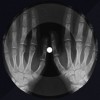
This is where things get a little tricky. This is a more obscure act with less available info about them and a single release that has had different titles and cover art depending on version. Initially released as Orgasm in 1969, then self-titled in 1973, then as Cave Rock in 1992, with each subsequent re-release taking one of these names, but never a singular one. I found out about it through a list (that I can’t find anymore) of songs that predated certain genres by a long time, and it pinpointed “Caledonia” as a very early version of black metal. The almost whispered shrieks are probably closer to black metal than anything released in the decade, admittedly, though I’d say the track is closer to a first instance of industrial rock with its distorted repetition having that cold mechanical feel alongside its blaring bagpipes. The rest of the album goes into directions that might not be as directly tied to metal, often very experimental and formless, often having its folk side go for a tribal feeling, and its psychedelia going for a Dadaist surrealism, full of sound effects and processed vocals that can feel kinda weird for the sake of being weird that makes this more of a curiosity than something to actually enjoy.
Standout tracks: “Caledonia”, “Crow Of The Black Tree”.
ADDITIONAL GENERAL LISTENING
Even though not all that was released in the ‘60s was actively working towards the development of a heavier music genre, metal’s formation still existed within the larger context of this decade. Just like with the more metal-relevant stuff, there’s plenty more to discover within the ‘60s beyond what might be considered mandatory listening. This is a section that could theoretically be expanded ad infinitum, so there’s no reason to stop at just what is picked here.

The Zombies - Odessey And Oracle (1968)
[Psychedelic Pop]
I remember watching Nardwar’s interview with Opeth before his show and he informs Mikael that The Zombies were also playing that same night in the city, and Mikael is like “That sucks, now I wanna cancel the show and go see them”. The Zombies were not really the most successful of the British invasion bands; even though “She’s Not There” from the 1965 debut got a lot of commercial success, by the time of their second album, they had to finance it themselves and Odessey And Oracle ended up being largely ignored upon release, leading to the band breaking up after its release. In the meantime its cult classic status became so undeniable that the surviving original members performed the album for its 40th anniversary. Out of all the bands in this “British Invasion” wave, they were perhaps one of the least overtly “rock”, but the material on Odessey And Oracle is really great pop music with a slight psychedelic edge, one that makes it feel more dreamlike that anything.
Standout tracks: “Care Of Cell 44”, “Hung Up On A Dream”, “Time Of The Season”.

Love - Forever Changes (1967)
[Psychedelic Pop]
I am technically going against the purpose of this article by picking what is pretty much the least metal of all of Love’s ‘60s albums, all of which are great and worthy of a listen. Forever Changes doesn’t have as many of the garage rock touches of the debut (especially) and Da Capo, nor the acid rock of Four Sail and Out There (especially). But Forever Changes is the one that remained Love’s flagship album, a sound sitting in between pop, rock, and folk, one that’s as psychedelic as it is elegant in its baroque touches, with sophisticated vocal harmonies and orchestral arrangements. Arthur Lee’s dark lyricism, full of disillusionment and paranoia, acts as a contrast to the usual flower-power of the hippie counter-culture, and that’s a haunting darkness that seeps into the music itself. It’s also the last album released by Love’s classic lineup, with everyone but mainman Arthur Lee departing afterwards, up until an inevitable break up in 1975. The band is technically still active nowadays, even though Lee passed away in 2006, mainly centered around guitarist Johnny Echols, who did perform on this record, and weird as the situation is, it’s good to be able to say that there’s still Love in this world.
Standout tracks: “Alone Again Or”, “A House Is Not A Motel”, “You Set The Scene”.

Scott Engel - Scott 4 (1969)
[Baroque Pop]
Around these parts we know Scott Walker more for his collaboration with Sunn O))), one that happened when Scott was already known to be an avant-garde musician, with 1995’s Tilt starting a sparse but strong run of experimental albums. But before that, Scott started out as a singer in the pop group The Walker Brothers (they were unrelated) then subsequently embarked on a solo career that went further in the baroque pop direction that his previous group flirted with. Scott 4 is a bit of a weird one comparatively. For one, it’s credited with Scott’s birth name instead of his artistic Walker pseudonym, which was probably one of the reasons why the album failed commercially. Secondly, it strips away the covers to focus solely on original material, and it somehow makes the orchestrations that were a huge part of the previous albums feel more stripped back here, often conveying an eerie atmosphere, and the contrast they have with his strong baritone vocals and darker lyrics, it feels like this is where the seeds for his eventual turn to the avant-garde were planted.
Standout tracks: “The Seventh Seal”, “Angels Of Ashes”, “The Old Man’s Back Again”.

Pharoah Sanders - Karma (1969)
[Spiritual Jazz | Avant-Garde Jazz]
By now you’re already aware of the “spiritual jazz” subgenre, and while I think John Coltrane’s A Love Supreme is the better album overall, somehow I think Karma is the better “spiritual jazz” album, which is a bit ironic considering that Sanders played saxophone on a couple of Coltrane records like Ascension and Meditations, and that kind of elongated dissonant playing feels familiar to anyone that heard an extremely blistering dissonant saxophone in a metal song, but on Karma that playing takes a more elegant direction while still keeping some of its dissonance. There are things I don’t fully like about the record, mostly in terms of the vocals, but as a whole Karma features a lighter touch of free/avant-garde jazz in its nearly half-hour piece “The Creator Has A Masterplan” that’s more accessible when coated in a very spiritual sound. It’s amazing to think that, before his passing in 2022, Sanders was also part of one of my favorite albums of the 2020s.
Standout tracks: “The Creator Has A Masterplan”.

Eric Dolphy - Out To Lunch (1964)
[Avant-Garde Jazz]
It’s very tragic to have your magnum opus be the last album you recorded before your passing. I don’t think Out To Lunch is so praised solely because of Eric’s passing one month before its release, though it certainly gets more attention than his other work because of it and I’m curious how his work would’ve evolved if he didn’t pass away at 36. Having previously worked with Charles Mingus and John Coltrane around the same time, he also started working as a bandleader, initially more as a hard bop / post-bop saxophonist and clarinetist, including an excursion into Latin jazz, but slowly introducing more and more avant-garde elements. Out To Lunch is where it feels like those avant-garde tendencies finally got pushed to the forefront, with parts of it feeling more structured akin to his earlier post-bop work and others where it feels like the structure breaks in a free jazz way, but the album is at its best when the line between the two blurs, when the “everyone's a leader in this session” statement that Dolphy made rings true in how the music on Out To Lunch feels ironically structurally intricate in its freedom.
Standout tracks: “Hat And Beard”, “Out To Lunch”.

Peter Brötzmann - Machine Gun (1968)
[Free Jazz]
Free jazz had been done before, even beyond just a more improvisational version of avant-garde jazz, and albums by Ornette Coleman and Max Roach are all foundational for the evolution of jazz as a whole. But as far as the most metallic and most abrasive that this genre had to offer in this decade, it’s Germany’s Peter Brötzmann who delivered something so mind-bogglingly abrasive that it genuinely feels like his saxophone is an actual machine gun. It’s no wonder that when I look at the cover art, it feels more like a punk record than a jazz one, both being equally confrontational. Machine Gun feels like it takes everything “ugly” about music - atonality, lack of structure, chaos, dissonance - and turns it to its logical conclusion as much as the ‘60s allowed his octet to. I think free jazz as a whole would’ve evolved safely without this album, but I don’t think the push towards extremity would make it collide with metal the same way it did with Naked City later on, and I think a bunch of dissonant saxophones in chaotic metal songs can be traced back to this moment.
Standout tracks: “Machine Gun”, “Responsible”.

La Monte Young & Marian Zazeela - The Black Record (1969)
[Drone]
Being a composer first and foremost rather than a musician, there’s a lot of La Monte Young’s work that isn’t in the typical album format that we’ve used for this article, and there’s a lot of “composed art music” that is very relevant for both the ‘60s and for metal that I haven’t touched because of this format incompatibility. Most relevantly, there was the minimalism movement, with one collective called Theatre of Eternal Music being active from as far back as 1960, including members like The Velvet Underground’s John Cale, Terry Riley, and La Monte Young and his wife Marian Zazeela. As far as studio recordings in the 1960s go, The Black Record, whose full title is “31 VII 69 10:26-10:49 PM / 23 VIII 64 2:50:45-3:11 AM” is a collaboration between the last two, a one-track-on-each-side album whose slow monotonous sine-wave-generator sounds along with the occasional gong and vocal harmonics, both clearly inspired by Indian classical music, took that minimalism into an elongated droning sound that’s as dark as it is patience-testing, forever merging the DNA of drone and dark ambient, and though it’s not necessarily this album that’s the pinnacle of the movement, it’s a snapshot of where the seeds for the sounds of Sunn O))), Earth, and Boris were planted.
Standout tracks: “31 VII 69 10:26 - 10:49 PM”.

Patty Waters - Patty Waters Sings (1966)
[Vocal Jazz | Avant-Garde Jazz]
There’s something so uniquely weird about this record, a vocal jazz record that should, in all fairness, be a vocal jazz record like any other. But there’s a very weird outsider music twist to it that makes it feel unique even if Patty is technically a competent jazz singer. The first seven songs on this record are originals written by Patty and seemingly very inspired by Billie Holiday, with the backdrop being mostly piano, stripped back in a way that makes them feel very intimate and with a certain bleakness in tone. Then comes the closer, a 13-minute cover of “Black Is The Color Of My True Love's Hair”, one that completely breaks down convention and has more in common with free jazz, and even though avant-garde jazz was in full swing at the time, I can’t imagine hearing such a vocal version of it in 1966. Feels like an even earlier version of a mix of Yoko Ono and Diamanda Galas.
Standout tracks: “Moon, Don't Come Out Tonight”, “You Thrill Me”, “Black Is The Color Of My True Love's Hair”.

Leonard Cohen - Songs Of Leonard Cohen (1967)
[Folk]
For the folk fans who want it darker. Leonard Cohen spun folk music that did not come from street marches or music halls, but from a strange hollow in the heart, a temple to the mystical intersections of melancholy, spirituality, sexuality, and suffering. His frank talk-singing, slow and unconcerned in manner while laden with emotional portent, made Cohen’s name synonymous with a certain brand of eloquent morbidity; few singer-songwriters have had such close command of a particular sentimental corridor, and although his catalogue was wide, he is certainly best known for the bitter, poignant hymns that his dry voice instantly signaled as heavy and dreary. While musically astute, as evidenced in the many memorable melodies that survived his preference for sparse deliveries, Cohen was even more a poet than a musician, and it is the richness of his lyrics, murmured in intimate conspiracy with each individual listener, that has in large part secured his legacy. His lyrics provide quiet illuminations of real characters and piquant sorrows, intertwined with the embers of religious anguish that sting all the more sharply in the convincing languor of his voice. Songs Of Leonard Cohen, his debut album, contains some of his finest work as both a writer and a performer. It is minimalist and mournful, mostly Cohen’s soft laments and his delicate guitar, with lightly cushioned instrumental accompaniment. Sometimes that accompaniment lightens the tone, as in the cloying backing vocals of “So Long, Marianne” or the occasional flutes and strings that crop up, but Cohen tends to shine best when croaking his pains to the floor. The album never reaches a lethal stage of overproduction, however, and his strange, sad tales of alienation offer a powerful experience for anyone seeking a pessimistic analogue to Bob Dylan.
Standout tracks: "The Stranger Song", "Hey, That's No Way To Say Goodbye", "Suzanne", "So Long, Marianne".
by SSUS

Simon & Garfunkel - Bookends (1968)
[Folk Pop]
No, I’m not including Simon & Garfunkel solely because one of their songs is the original for one of the worst metal covers out there. Even though I’m mostly doing it because of how popular and emblematic they were for their time, it had been a long time since I listened to their full albums and only revisiting their most famous singles left me with the impression that they’d be more milquetoast than they actually are. Bookends is clearly an album where the two had an increasing amount of creative freedom, even if the album’s structure has Side A be the actual album, conceptually bookended by two short tracks of the same name, while Side B is either previously released singles or leftover stuff from the soundtrack of The Graduate. While Side B does have a lot of the stuff that people are familiar with, especially the really great “Mrs. Robinson” track, it’s Side A that is more conceptual and experimental, centered around a life journey, and full of more experimental psychedelic sound effects, from the sampled “Voices Of Old People” song to how wildly psychedelic “Save The Life Of My Child” sounds to the spooky orchestrals of “Old Friends”.
Standout tracks: “Save The Life Of My Child”, “America”, “Mrs. Robinson”.

Nick Drake - Five Leaves Left (1969)
[Chamber Folk]
The renaissance of folk music in Britain and the US during the 1960s was one of the foremost cultural movements of the era, and many storied stalwarts were endowed with longevity and fame as generational bards. In their midst came along one man who never enjoyed such success nor lived to see his influence: Nick Drake, a quiet guitar-strummer whose mental struggles chased him to a sad death at 26 after making little mark with his music. It was only in the years after his passing that his work began to grow in status, and particularly his debut, Five Leaves Left, which is now recognized as one of the defining albums of folk music in the 20th century. On Five Leaves Left, Drake opens himself to his melancholy, painting images of rain and haze, relating memories of loss and disappointment in an absorbing and plaintive acoustic dream. His style is introverted: poetic, lyrical, and calm, with mood-driven compositions beautifully produced; his voice is gentle and breathy, with a somnolent quality appropriate to the heavy themes. His skillful acoustic guitar is lightly accompanied by accent instruments like piano, flute, and horns, with notable bass and guitar contributions from Fairport Convention members Richard Thompson and Danny Thompson (no relation). Several songs feature string arrangements that give his intimate illustrations a chamber music feeling, most notably "Way To Blue", which is indeed way too blue - perhaps the most lachrymose composition in his meager discography, the song is slow, soporific, and grave, as wearying as sonic laudanum. The tone of Five Leaves Left is somewhat mysterious, however: though the quiet mood is apparent from the outset and soon depresses into waves of despondency, Drake maintains a guarded distance and even indulges in a playful approach sometimes. Songs like "Cello Song" and "The Thoughts of Mary Jane" feature bright, quickly picked guitar melodies that feel closer to bluegrass than the sober English folk that surrounds, and there are curious melodic twists among the soft sentiments that make the album more than an emotional slog. Above all else, Five Leaves Left is a masterfully constructed mood piece, and that mood does vary; but thanks to its rich production, its careful arrangements, and the gentle, personal touch of Drake's performance, this is most of all an accomplishment in the exploration of folk music's dark, despairing depths.
Standout tracks: "Way To Blue", "Time Has Told Me", "River Man".
by SSUS

Townes Van Zandt - Townes Van Zandt (1969)
[Contemporary Folk]
I’m maybe not as well versed in American folk beyond the very obvious, but it became very apparent to me that beyond the top layer of names that made it to the mainstream, Townes Van Zandt is a name that is very respected by people in the know, and that’s seemingly also people in the metal world, given that there’s been not one, not two, but three tribute albums made by various metal alumni, so the connection to metal is much stronger than most other contemporaries despite being stylistically quite different. Country-tinged folk is not something you’d usually associate with such a metallic vibe, but the very down-to-earth, depressing tone of some of Van Zandt’s lyricism and voice, especially on such songs like “Waiting Around To Die”, feels like a doom metal precursor. The one thing that is weird about this specific album is that it is a self-titled album despite it being the third one from Townes, mostly because it re-records songs from the debut album released one year prior (there was one more album in between these two), and the versions here sound more stripped-back and personal compared to their lusher originals.
Standout tracks: “For The Sake Of The Song”, “Waiting Around To Die”, “Lungs”.

Frank Sinatra - Sinatra At The Sands (1966)
[Vocal Jazz]
When thinking about the music of a specific decade, it’s easier to think about artists who made a break during that decade (or late in the one prior), but it’s just as true that artists from the ‘50s and earlier were just as active during the ‘60s. Yes, I could’ve gone with an Elvis or Little Richard or Chuck Berry record, but to go even earlier, there’s Frank Sinatra, whose first releases are in the mid-’40s, here performing live already in his early 50s. Sinatra At The Sands is not only his first commercially released live album, but it also sports Count Basie and his orchestra as a backing band, and the whole thing is arranged and conducted by Quincy Jones, so the sheer star power alone makes this a highlight. One twelve-minute interlude that’s more like a bad stand-up comedy set aside, this both has a very neat “hotel brass” feel to it, while also showcasing why Sinatra is one of the most recognizable names and voices in the world. And even though this is relatively late in the man’s career, it still arrives earlier than what’s most likely his most recognizable song, “My Way”, often mistaken to be a Limp Bizkit cover.
Standout tracks: “I’ve Got You Under My Skin”, “Fly Me To The Moon”, “The September Of My Years”.

Muddy Waters - At Newport (1960)
[Blues]
In line with the “earlier artists existing in the ‘60s” section, and since we’ve already touched on the blues as a metal precursor, we can go slightly earlier with Muddy Waters being more than a decade older than B.B. King and having put out music since the ‘40s, and having already released plenty of recognizable songs by the time the ‘60s rolled around. At Newport is barely a ‘60s album that way, since most of the material is older. The blues here is still a touch detached from its foundations, more in line with the electric blues that was popular in the coming decade, but there’s still some grit even in the more accessible and electrified small band setup. At Newport is more than just a live album collecting some of Muddy’s best already released songs, often considered the first blues live album, but Muddy did show that he wasn’t already a legacy act by that point, with his transition to studio albums only starting, and some of his best work being in the coming decade in the form of Folk Singer, Electric Mud, and After The Rain, all of which I recommend, but At Newport feels more significant as a stepping stone between pre-’60s blues and electric blues.
Standout tracks: “I Got My Brand On You”, “Baby Please Don’t Go”, “Got My Mojo Working”.

Big Mama Thornton & The Chicago Blues Band - The Queen At Monterey (1967)
[Blues]
Since we already had one Muddy Waters album, how about one where he takes a backing role, where he and his band are acting as the backing band for Big Mama Thornton. Thornton is mostly known for being the original singer of “Hound Dog” and “Ball & Chain”, both of which became huge hits for other people when they covered it, neither of which appear on this record. Recorded in one April in 1966, The Queen At Monterrey does benefit a lot from how great the backing band is, especially the guitars and pianos, but the voice of Big Mama Thornton is gritty and bellowing, a commanding emotional presence that not only shows why she has been such an influence in the development of rock ‘n’ roll, even if by 1966 that role has been a decade removed. There’s something very tragic about Thornton having had such an important role and such great music, only to die penniless in her 50s.
Standout tracks: “Sometimes I Have A Heartache”, “Everything Gonna Be Alright”, “Feel The Way I Feel”.

Stan Getz & João Gilberto - Getz Gilberto (1964)
[Bossa Nova]
Even though most of the music remembered from this period is very limited to the Anglocentric sphere, other countries like Brazil also had huge explosions of popular music. The “samba” style that took root in the country as early as the 1920s eventually intermingled with American jazz influences to create sounds like samba-jazz and especially bossa nova. It’s only fair that the album that popularized bossa nova is a collaboration between an American saxophonist and a Brazilian guitarist/vocalist, and honestly composer/pianist Antônio Carlos Jobim, even though his name appears on the cover, should’ve received a proper collaborating artist credit akin to the first two. The album is mostly famous for “The Girl From Ipanema”, not only because that became one of the most famous songs period, let alone just from Brazil, but also because Astrud Gilberto’s quiet vocals on it made her an influence on all bossa nova that came afterwards. The rest of the album keeps things in this very soothing, mellow, sun-drenched space that keeps it from being too overshadowed by its flagship song.
Standout tracks: “The Girl From Ipanema”, “Corcovado”, “Só Danço Samba”.

Tropicália Ou Panis Et Circencis (1968)
[Tropicália]
Just like bossa nova had Brazilian music take cues from jazz, another movement in Brazil appeared that instead took from a more contemporary sound: psychedelia. The sound of tropicália is more akin to psychedelic/baroque pop than the fuzz-driven psychedelic rock, and even the cover art makes this album feel like the Brazilian version of Sgt. Pepper’s Lonely Hearts Club Band. Tropicália ou Panis et Circencis is almost as much a manifesto as an album, with many of the contributing artists, from Gal Costa to Os Mutantes to Gilberto Gil among others, becoming landmark artists in Brazilian music and the MBP (música popular brasileira) movement that encapsulated the tropicália one. Though the avant-garde-ness of the lyricism is lost on me and other non-Portuguese speakers, there’s a rebellious out-of-the-box zaniness that does seep into the music and makes it feel distinct from both bossa nova and psychedelic pop.
Standout tracks: “Misere Nobis”, “Parque Industrial”, “Mamãe, Coragem”.

The Supremes - Where Did Our Love Go (1964)
[Motown Sound]
In rock-centric circles we like to remember the ‘60s for stuff like the British Invasion and the psych rock explosion, but really a lot of the popular music of the decade was dominated by the Motown sound, centered around Detroit’s Motown Records. Usually that came in the form of vocal groups, either all-male or all-female ones, and the most successful and emblematic of the bunch were The Supremes, with their most famous lineup being the trio of Diana Ross (who turned out to be the biggest star of the bunch), Florence Ballard, and Mary Wilson. Where Did Our Love Go is the album where the formula of Motown sound was perfected, even though it's more of a collection of already released singles than anything else, but it captured the moment when this sound became a mainstay of the mainstream and it opened the door for soul and R&B and all its derivations to be mainstays as well.
Standout tracks: “Where Did Our Love Go”, “Baby Love”, “Standing At The Crossroads Of Love”.

Aretha Franklin - Lady Soul (1968)
[Soul]
Look, everybody knows “Respect”, the rendition so good it made everyone forget that it was originally an Otis Redding song before turning into a feminist anthem. “Respect” is Aretha’s best song and one of the best songs of all time. But even though the album that contains it, 1967’s I Never Loved A Man (The Way I Love You), effectively turned her career around by finally feeling like it was the sound that Aretha always wanted to make, which is very gospel-inspired deep soul, it’s two albums later in Lady Soul where it actually feels like the album as a whole finally captures what made Aretha great. Lady Soul is where she really became “The Queen of Soul”. Even if the hits and the other songs are not “Respect”, songs like “Chain Of Fools” and “(You Make Me Feel Like) A Natural Woman” make the album feel more consistently great, as if it honed what made I Never Loved A Man (The Way I Love You) work in the first place, in a way that didn’t feel as rushed as Aretha Arrives, the album released in between the two.
Standout tracks: “Chain Of Fools”, “(You Make Me Feel Like) A Natural Woman”, “Ain’t No Way”.

Isaac Hayes - Hot Buttered Soul (1969)
[Progressive Soul]
Before he was the voice of the chef from South Park, Isaac Hayes was one of the most revolutionary voices of soul. Having released a poor-selling debut one year prior, Hayes agreed to record a follow-up only if given full creative control, and Hot Buttered Soul does feel like an album that’s made with such creative control given its excess. Covers of “Walk On By” and especially “By The Time I Get To Phoenix” get extended beyond their normal runtimes by going over 12 and 18 minutes respectively, something that makes a much jammier version of soul, full of funkier repeated grooves and an array of improvisations from the likes of the guitars, the organs, and the drums. If it wasn’t clear by now, this album was a huge influence to the funk sound that would emerge in the following decade. Of course a lot of it is due to the jammy instrumentation and the backing vocals, but it’s Hayes’s hypersexuality that’s the maker in the “make it or break it”. Probably in competition for the album most children were sired to.
Standout tracks: “Walk On By”, “Hyperbolicsyllabicsesquedalymistic”.

Sly & The Family Stone - Stand! (1969)
[Psychedelic Soul]
Considering how much of the hippie movement came out of San Francisco, it’s no surprise that a San Francisco band is one that applied that same kind of psychedelia to sounds like gospel and soul to create what would end up being psychedelic soul. Perfecting the sound over the course of the previous three albums, it was Stand! where it felt like Sly & The Family Stone became ambitious enough to commit to using this sound for social commentary. 1971’s There’s A Riot Going On is the much darker and more pessimistic pinnacle of that sound, making Stand! feel like the last stand of a more ‘60s-ish optimism in regards to the social commentary. More so, it feels like the stepping stone between James Brown and Parliament-Funkadelic in the development of funk, even having a song called “Sex Machine” released one year earlier than James Brown’s song.
Standout tracks: “Stand!”, “I Want To Take You Higher”, “Everyday People”.
SSUS: Presumably you are now either inculcated into the wisdom of your forebears or angry at us for mischaracterizing or omitting something important. These are all important parts of liking music. Yes, “Octopus’s Garden” is really my favorite song off Abbey Road. Sue me and my benthic buddies. Yes, Neil Young is technically funeral doom. Yes, some of these bands and genres actually got better after this decade, but, hey, we’re trying to preserve history. Join us next time when we catalogue the 200 most important albums released in the first three months of 1971. Anyway, we welcome any discussion of what we might have missed or gotten wrong, since that sort of thing is inevitable, but regardless we hope that this article can be of some modest use to those of you who are seeking to explore the musical output of the 1960s beyond those few heavy metal classics already immediately known to us.