Nameless Infinity - What Gnaws At The Roots Of The Earth - review

Nameless Infinity - What Gnaws At The Roots Of The Earth - review

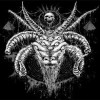
Cover image of the reviewed item
Release date
March 06, 2026
Reviewer
7.2
6.8
Tracklist
01. Sacrifice In The Temple
02. What Gnaws At The Roots Of The Earth
03. From Dust To Dust
04. To Raise Up A Leviathan
05. Fungi From Yuggoth
06. What The Moon Brings
A review by
AndyMetalFreak
March 10, 2026
Listeners are invited to embark on another voyage into the depths of the Nameless Infinity. Only this time you won't be exploring the infinite cosmos above, but rather a place closer to home, where in the abyss below you might discover What Gnaws At The Roots Of The Earth.

Nameless Infinity is a German solo project masterminded by vocalist/composer Feynman. He started the project in 2024 with no particular genre in mind, but rather as a musical exploration that reflects on his fascination for Lovecraft-inspired cosmic horror. What's interesting about the project is the music is programmed entirely by VSTs as opposed to being instrument-based; however, Feynman does perform his own vocals. Although it's hard to narrow down the project's style to an exact genre, the debut EP Grave Of The Universe focused on industrial, black, and to a lesser degree, doom metal, which resulted in a distinctive metallic sound and cosmically menacing atmosphere.

This sound and style was developed further on the following full-length album Remnant, which had an intriguing visionary Lovecraft-inspired concept where the thought-provoking lyrics played a role as important as the music itself, covering menacing narratives, and topics involving physics and introspective universe-questioning. Now Feynman intends to raise the bar even higher with sophomore effort What Gnaws At The Roots Of The Earth.

What Gnaws At The Roots Of The Earth channels the H.P. Lovecraft universe once again, this time by confronting the greed and vanity of mankind on their arrogant quest for immortality, divinity, and infinity, and whilst the primary style is still industrial, the blackened elements are featured to a lesser extent with elements of doom noticeably increasing. Whereas Metren Angerjärv (Dreadrealm) handled production duties on Grave Of The Universe and Remnant, Feynman handles both mixing and mastering here as he descends further into the depths of musical exploration.

"Sacrifice In The Temple" is a cosmically atmospheric and ritualistic opener that gets the ball rolling, immediately pulling you like a gravitational force into the strange and disturbing soundscapes that resemble the Lovecraft universe. The most striking feature is the raw and authentic sound and production, which makes for a more intimate and sinister listening experience. The guitar has a deep powerful tone, with a ripping buzzsaw effect in the vein of Electric Wizard, and the tempo is consistently moderate, focusing on a repetitive structure through a hypnotic pulsating rhythm and industrialized cyber synths. The vocals often feel like one of Lovecraft's deitites preaching a sermon to its succumbed followers (who you spontaneously hear ritualistically chanting in the background on several tracks), except you now feel included in this disturbingly sinister ritual.

Feynman's fascination for Lovecraft horror is evident throughout, from the haunting synths, eerie ritualistic chanting, and creepy bell chimes of "From Dust To Dust", to the heavy industrial droning sounds ascending from the dark abyss below in "To Raise Up a Leviathan", a song that's just as sinister as the title suggests, not to mention the creepy spoken word in "What the Moon Brings" that sounds like a messenger narrating from the Lovecraft universe. However, "Fungi From Yuggoth" is perhaps the most interesting and diverse song. This has some surprisingly upbeat rhythmic moments, along with striking riff and synth melodies, and even begins and ends with a short melancholic string section. However, it's the vocals that are most intriguing; they sound convincingly evil and intimately hostile, representing otherworldly monstrous entities who either gnarl and gargle or hauntingly whisper. Either way, both vocal styles are equally sinister.

Lovecraftian horror is nothing new in extreme metal, with bands across all genres (from The Great Old Ones and Sulphur Aeon, to Blut Aus Nord and even Morbid Angel) delving into its themes and philosophies. These bands, amongst many others, have managed to successfully bring the mysteriously intriguing universe to life in more ways than one. So too has Nameless Infinity, and What Gnaws At The Roots Of The Earth has done so in a way that sounds so vivid and authentic; in fact, there are times when I feel like What Gnaws At The Roots Of The Earth could even provide an ideal soundtrack for an 80s sci-fi horror. 

What Gnaws At The Roots Of The Earth is certainly a step up in quality from Remnant, but I believe Feynman was just starting to find his feet then. Now you can really begin to hear a trademark style and sound starting to develop, and it's unlike anything I've heard in the metal industry before. It's such a commendable effort for a one-man act who's still undeniably fresh into his musical exploration, and although it's still rough around the edges, with dedication, passion, and experience, Nameless Infinity might hopefully one day soon be mentioned as a Lovecraft phenomenon in its own right.
Rating breakdown
Performance: 7
Songwriting: 7
Originality: 9
Production: 6
Written on 10.03.2026 by
An honest review that you don't necessarily have to agree with.

Comments

Comments: 6 Visited by 41 users
F3ynman
Nocturnal Bro
Contributor

Posts: 3433


Permalink
+3
10.03.2026 - 16:00
F3ynman
Nocturnal Bro
Contributor

Posts: 3433


Wow, Andy!!! Thank you for the exceptional review!!!

"unlike anything I've heard in the metal industry before" — now that's a statement, especially considering how many albums you listen to per year!

I'm glad you found the songs and the vocals convincingly Lovecraftian, and, indeed, I also think "Fungi from Yuggoth" is probably the most diverse (but I'm very proud of all of them )

Here are some of my personal thoughts and commentary on making the album, going song-by-song (I guess someone could even submit this in the song-by-song section )


1. Sacrifice in the Temple:

Just like the previous album, this one starts with a song about (self-inflicted) pain, this time in the context of a religious cult. I'm pretty proud of the different visceral experiences I describe in the lyrics, and I especially like the clever line: “break free from your ribcage”. The song is slightly inspired by the title of one of my newest favorite albums: Arizmenda's Stillbirth In The Temple Of Venus. That album also featured prominent piercing guitar leads that inspired me to adopt something similar; these screeching guitar leads play a key role in the melodies of all of the songs on this album.

2. What Gnaws at the Roots of the Earth:

The theme of the title track is due to a mix of inspirations. First, I always loved Gandalf's line in The Lord of the Rings: “the world is gnawed by nameless things”. Second, I was inspired by Lovecraft's short story “The Festival”, with its concept of an endless underground labyrinth full of burrowing worms, fattened by the souls of devil-bought corpses. Third, the idea of descending into caverns full of monsters is also inspired by the Super Metroid game, which I recently played.

3. From Dust to Dust:

While researching Japanese culture, I stumbled upon the Buddhist “Heart Sutra”. The concept of being one with emptiness and the void fit well with the themes of some of my songs on the previous album. Furthermore, I liked the monotonous, hypnotic style of Buddhist chanting. This song was originally going to be titled “Heart of Emptiness” and mainly deal with this Heart Sutra. But then I started coming up with this other idea about divine punishment as a result of human vanity and pride. Similar to “Forsaken Species” of the previous album, the lyrics of this song deal with humanity's role within an infinite cosmos. While “Forsaken Species” spoke of multiple gods (à la Lovecraft), this song is more explicitly biblical, citing ideas from the Book of Genesis (Sodom and Gomorrah, from dust to dust, etc). So, while the lyrics changed pretty dramatically in the process, I still kept the Buddhist chanting in the background, just to add another unnerving flavor of religion.

4. To Raise Up a Leviathan:

Funnily enough, I actually first found these verses from the Book of Job via Lovecraft. Specifically, in Gou Tanabe's manga adaptation of “The Call of Cthulhu”, when the sailors face the towering monstrosity of Cthulhu, they quote this biblical passage. The idea of Job cursing his existence fit well with my themes of nihilism and mortality. I also wanted to experiment a bit in the style of music on this song. Thus, instrumentally, it's the song closest to drone-doom with its thick layers of reverberating guitar.

5. Fungi from Yuggoth:

Once again, this track is mostly inspired by Lovecraft and his concept of Yuggoth, the 9th planet from the Sun (which he predicted before it was actually discovered and named Pluto). Additionally, I incorporated this idea of out-of-the-body, psychedelic sensations that people experience when they consume mushrooms. It seems to be a practice that dates back to ancient times. Perhaps ancient peoples found a way to unlock some hidden part of their minds, allowing them to enter a gateway to the gods, treading a path that their mortal bodies couldn't follow. Lastly, the stated ambitions of universal domination in the song are also probably inspired by Vektor’s Terminal Redux. Musically, it might be the most diverse song here, with clean whispering vocals, a mix of deep and raspy vocals, and lots of layered musicianship. It's the song that took the longest to make, as I came back to it periodically to ticker with it. In the end, I think it turned out pretty good!

6. What the Moon Brings:

This is the most overt Lovecraft reference, as I simply read aloud the whole short story “What the Moon Brings”. I just love this story's great nightmarish imagery, with the dreamer following the dead lotus faces to reach this vast ocean. And as the tide ebbs away, you glimpse this ancient, gigantic, half-buried statue of untold mysteries. Plus, to link back to the album title, we see the writhing of sea-worms, feasting on the world's dead. This song also saw me fulfill a wish of my own, as I always wanted to hear a Lovecraft-inspired song that actually includes eerie flute playing—an instrument that shows up a lot in his stories. So, I decided to make a Lovecraft song that checks off all my personal boxes: creepy lyrics, unnerving droning riffs (spiced up by that piercing lead guitar), and spooky flute playing!


And for those who want to listen to the album, here's the embedded player / link to Bandcamp. Enjoy!

Loading...
AndyMetalFreak
A Nice Guy
Contributor

Posts: 6658


Permalink
+1
10.03.2026 - 18:18
Rating: 7
AndyMetalFreak
A Nice Guy
Contributor

Posts: 6658


Written by F3ynman on 10.03.2026 at 16:00

Wow, Andy!!! Thank you for the exceptional review!!!

"unlike anything I've heard in the metal industry before" — now that's a statement, especially considering how many albums you listen to per year!

I'm glad you found the songs and the vocals convincingly Lovecraftian, and, indeed, I also think "Fungi from Yuggoth" is probably the most diverse (but I'm very proud of all of them )

Here are some of my personal thoughts and commentary on making the album, going song-by-song (I guess someone could even submit this in the song-by-song section )

Thanks, I'm glad you like the review It's certainly a unique album and one I enjoy. I'm now looking forward to what you have in store next!

Thanks for sharing your thoughts song-by-song and giving us an insight into what each song means. The themes are very intriguing and the personal touch makes the music all the more special!
Loading...

Posts: 212


Permalink
10.03.2026 - 21:08

Posts: 212


Written by F3ynman on 10.03.2026 at 16:00


Here are some of my personal thoughts and commentary on

Hey, since we are on the subject maybe you can answer some of my questions regarding your work?

1. I was always fascinated by musicians that find inspiration in stories, concepts, philosophies etc . How do these non musical concepts translate into notes ? Is it a certain mood that they invoke or something else ?

2. Writing industrial music can be dangerously freeing, meaning there are so many different layers and textures you can explore. How do you know when to stop or when the song is completed?
Loading...
F3ynman
Nocturnal Bro
Contributor

Posts: 3433


Permalink
10.03.2026 - 22:43
F3ynman
Nocturnal Bro
Contributor

Posts: 3433


Written by ForestsAlive on 10.03.2026 at 21:08

Hey, since we are on the subject maybe you can answer some of my questions regarding your work?

1. I was always fascinated by musicians that find inspiration in stories, concepts, philosophies etc . How do these non musical concepts translate into notes ? Is it a certain mood that they invoke or something else ?

2. Writing industrial music can be dangerously freeing, meaning there are so many different layers and textures you can explore. How do you know when to stop or when the song is completed?

Thanks for the questions!

1. For me, it was a mix of approaches. Sometimes I had a lyrical concept, and then I experiment with the music until I find the matching atmosphere. Other times I get a sudden idea for a cool riff which I try to recreate then in the programming, or, while listening to other bands, I hear a riff that inspires me. But, most of the time, I was just trying out different note combinations until it matched that appropriately eerie or intimidating mood that I wanted to convey.

2. Interesting question. I guess I added the tracks I needed for a particular song ("Fungi from Yuggoth" was the first I started on for this new album), and then I just stayed mostly consistent for the remaining songs. I typically had 2 vocal tracks, a drum track, a bass guitar track, a "softer" guitar track (for the calmer sections), a "harder" guitar track (for the main rhythm), and 2 lead guitar tracks (for the main melodies and piercing pinch harmonics). Some songs required more tracks to fully convey my ideas, like the flute on "What the Moon Brings" or the Buddhist chanting sample and bell chimes on "From Dust to Dust".
Loading...

Posts: 212


Permalink
11.03.2026 - 10:16

Posts: 212


Thank you for the answers!
Loading...
Bad English
Tage Westerlund

Posts: 64432


Permalink
+1
05.04.2026 - 10:40
Bad English
Tage Westerlund

Posts: 64432


Good job to respect to out ms user all people should review this as they did to mussclassia band.
----
I stand whit Ukraine and Israel. They have right to defend own citizens.

Stormtroopers of Death - "Speak English or Die"

I better die, because I never will learn speek english, so I choose dieing
Loading...

Hits total: 485 | This month: 27