I'll be the first to admit that I'm not a Lordi fan. Not because I don't like their music, but I really never got around to listening to them outside that one song. So they always occupied that space in my mind where I said I'd eventually get to their stuff so I won't just consider them that Eurovision rock band. That never really happened, but when adding new releases I came upon this boxset. To my surprise, this boxset didn't contain old albums, but upcoming ones. And one by one each of these albums were released independently of this boxset, with the last one sometime around mid February. Technically this is my last 2021 album review, but also I kinda had to wait until now for all the albums in it to be available to stream. So here we are: my first time listening to a full Lordi album, and it's seven of them.
You may ask why the hell do Lordi just straight up release seven albums at once. Well back in early 2020 they released Killection and were supposed to tour for it, like bands used to do when they released albums. We all know what happened after a few months, so the band decided to use that time to make music instead. And because they had so much time on their hands, they wanted to do something different, outside of just making another Lordi album. So they came up with the concept of making each album have a different sound, as if set in a different era in the fictional Killection timeline. Hence Lordiversity. Thankfully, because of how they were released, I don't have to spend too much effort on each of the albums (imagine if I had to do a separate review for each of these).

The first one is Skelectric Dinosaur, set in 1975. Even looking at the cover art, and then reinforced by the music itself, is the feeling that this is basically a KISS album. And sure, there's some other influences here from bands like Alice Cooper, Blue Öyster Cult and early AC/DC, as well as other hard rock, blues rock and glam rock bands that aren't on Metal Storm. This kinda perfectly exemplifies that hard rock sound of the mid 70s, where bands were pretty heavy for their time but not heavy enough to be heavy metal by today's standards. And the band is pretty good at replicating that sound, with the guitar solos and the organ sounds being highlights in the performance.

The second one is Superflytrap, set in 1979. Before listening to any of the albums here, this was the one I was most excited for. The prospect of a rock/metal band straight up doing disco is hilarious. A lot of times that a rock band would get more accessible, someone here would call it "disco". Well, now it legitimately happened. It kinda makes sense that the band would follow-up a KISS-sounding album with a disco one, considering that "I Was Made For Loving You" exists. Superflytrap is still a bit closer to the rock side than acts like Boney M and Bee Gees (their disco era) were, so even if the basslines and the synths are massive hightlights, there's still a pretty significant guitar presence. The backing vocals also do more heavy lifting than anywhere else.

The third one is The Masterbeast From The Moon, set in 1981. Lordi is not really the band you would expect to hear making songs longer than ten minutes. And even if that's the case for just one of the songs here, it's still quite a weird achievement. This album is probably the most narratively conceptual, which makes sense with it being the "prog" one. But it's still more on the early 80s kind of prog, so more of a Rush / Electric Light Orchestra / Magnum mix. And even then, there's plenty of moments that feel more metal than anything on the previous two records, but coupled with more symphonic elements. It's not as versatile or expansive as the "prog" label would suggest, but it's definitely the most versatile and expansive of the bunch.

The fourth one is Abusement Park, set in 1984. If the previous albums were maybe marginally heavy enough to be considered metal in their time, Abusement Park is the first that takes a closer position within metal, even if half of it still seeps in hard rock sounds. So it's in between a Scorpions, W.A.S.P., Def Leppard, and Accept. Expect tongue-in-cheek arena glam with big choruses, big guitar solos, and finally having Mr. Lordi's gruff vocals fitting the music, sounding a bit more in the vein of Udo Dirkschneider. And there's a Christmas song for some reason.
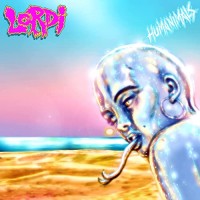
The fifth one is Humanimals, set in 1989. It isn't too far off from the previous one, but takes the entire sound in an even less metal direction. The choruses were already big, but the AOR spin in the vein of late 80s Alice Cooper, Van Halen, and Bon Jovi makes everything more glittery and pop, especially on the production front. The guitars and keyboards make half the record, even if the direction they're taking is lighter. The whimsical tone works so well with the overabundance of backing vocals in those larger-than-life choruses. This is definitely the catchiest of the bunch.

The sixth one is Abracadaver, set in 1991. The previous albums pretty much tiptoed in and out of metal, and even at their hardest still kept a steady foot in hard rock. Abracadaver is a mix between the punky thrash of Anthrax, the groove thrash of Pantera, and the pedal to the metal of Painkiller-era Judas Priest, and Metallica also comes alongside the Morricone opening. This is the first album where I feel like the drumming takes the cake in terms of highlight, making up in a way for the near absence of the keyboards. The gruff vocals feel even more fit in the harshest moments. But in some way, because this is closest to what I'd expect to hear from a metal band, it felt like the least exciting of the bunch, even if the songs themselves were good.
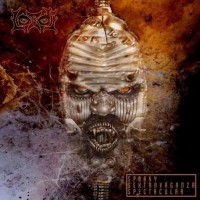
The seventh and final one is Spooky Sextravaganza Spectacular, set in 1995. If that album title reminds you of White Zombie, you've hit the jackpot, since this is pretty much a industrial metal album in the vein of Fear Factory, Marilyn Manson, and Ministry, with the electronic elements taking more center stage after their absence in the previous album. The tone is gnarly, the vocals are more processed, and there's a pretty good balance between moments closer to industrial metal and moments closer to industrial rock, even some that are more in a synthpop-y Gary Numan vein.
In some way it was a bit hard for me to approach this from a non-Lordi fan point of view, since I wasn't really sure how much each of these deviated from their usual sound. I assume each of them quite a bit, since the boxset really delivered on the "Lordi diversity" promised, and none of these albums sounded alike. I can't say I'd pick any of them over most albums from the actual eras they were emulating, but they've done a consistently good job of approaching these specific sounds and making something believable without ever feeling like their effort in sounding a certain way wasn't paying off enough. The vocals were probably the biggest obstacle, in that they weren't always fit for the style of music they were going for, especially on Superflytrap. Each of the members had moments to shine on different albums, and I've made the case for pretty much each of the instruments being highlights on their respective albums. I've noticed that one of the most important elements of their songwriting was making a strong chorus, regardless of the genre. Going through so much music all at once, I can't say much of it really stuck with me, but they feel like the kind of songs that would make it easy to feel familiar with on further listens.
Giving this a binge listen is a bit exhausting, so I do recommend going by the sounds one finds more interesting first, based on the descriptions. Each album is between 30 and 45 minutes in runtime, so none of them really overstay their welcome. And also none of them really have too many surprises, so it only takes one or two songs to decide whether the album's sound is appealing or not.
Lordi were supposedly initially going to do ten albums instead of seven. And judging by how some gaps between emulated years range between 2 and 5, it's not that hard to imagine where some more samples years could've been set. I would've been interested to hear something like a 1977 punk album or a 1986 thrash album or a 1993 grunge one. And that's just my speculation. Does Lordiversity make me want to listen to more Lordi? Yes and no. For one, I've had my fair share of Lordi for a while, and also a lot of Lordiversity's appeal was the said diversity. Take that away, and I'm not jumping at the opportunity of hearing the band just going at their own established sound for more than a couple of albums. There's still something I find a bit off-putting about their brand of humor and their presentation, and I can't quite put my finger about it, considering that the band had to make this ambitious extravaganza to get my attention.