
The Meads Of Asphodel - Damascus Steel - review
The Meads Of Asphodel - Damascus Steel - review
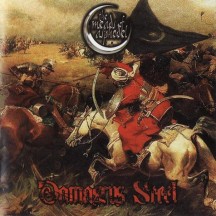
Tracklist
01. Psalm 666 (Intro)02. Creed Of Abraham
03. Hollow Womb Of Suicide
04. Sword Of The East [Hawkwind cover]
05. Satanic Black Nubian Pharaohs
06. Wonderful World [Louis Armstrong cover]
07. The Gods Who Mock Us
08. Behold The Kindred Battle Carcasses Strewn Across The Bloodied Dunes Of Gilgamesh Mute In The Frenzied Clamour Of Deaths Rolling Tongue And Ravenous Bursting Steel
09. Beyond Death And Darkness
A review by
Auntie Sahar June 10, 2014
Damascus Steel (along with its successor, The Murder Of Jesus The Jew) is probably the one Meads album where the Middle Eastern themes feel the most fully developed. This atmosphere is set immediately with the brief intro "Psalm 666," featuring a sample of a George Bush speech about the Iraq War linked to a reading of Psalm 23, with a sarcastic, tongue in cheek irony that can only be recognized as one of the distinct trademarks of the band. What follows is a contorted journey through raw black metal ("Creed Of Abraham"), some groovy techno elements ("The Gods Who Mock Us"), and (perhaps the most impressive aspect of the songwriting) a fantastic use of native percussion to help give the music a distinct tribal edge, such as on "Hollow Womb Of Suicide" and the massive "Behold The Kindred Battle Carcasses," easily one of the best cuts these Brits have ever done. Curiously enough, Damascus Steel also sees the Meads departing from tradition, as it is their last album to feature any cover songs, including an extremely bastardized version of Louis Armstrong's "Wonderful World." Describing the differences would simply ruin the fun: just listen to it and let the hilarity ensue as intended.
What really makes Damascus Steel the excellent album that it is, however, is its highly evolved attention to a variation in production, and it is likely the best of the band's discography in this regard. With the more aggressive moments, The Meads Of Asphodel hark back to the days of The Excommunication Of Christ and their early demos, and very dirty, murky technique is employed. Meanwhile, when the more experimental tracks rear their heads, this filth somewhat gets mopped up, in favor of a more crisp delivery that brings everything out and sounds a lot more all-encompassing. This style would only be further embellished upon in the band's future, and it is almost impossible to imagine the sound of albums like The Murder Of Jesus The Jew and Sonderkommando without the groundwork that Damascus Steel helped to lay.
Damascus Steel can thus be seen as a sort of a pivotal crossroads for The Meads Of Asphodel, an album that both paid respects to their roots while also transcending them, planting the seeds for many ideas to come in the process. That cliche that a band's third album is the "make it or break it point" more than stands true in this case. The Meads were happy with their sound up to that point, but they also wanted to push it to the brink, to see how far they could go with it, and they succeeded. Many people often consider The Murder Of Jesus The Jew to be the peak of the band's career, which it very much is, but it's also important for diehard fans to remember that Damascus Steel was a fundamental stepping stone that helped them get there, and launched them into the superior songwriting and critical acclaim that you now see them both producing and receiving.
Is Santa Claus black? Does it snow in Africa?
Written by Auntie Sahar | June 10, 2014
Comments
Comments:
4
Visited by
36 users
| Posts: 1178 |
 Posts: 5989 |
| Posts: 1178 |
| Posts: 5989 |

Hits total: 3479 | This month: 13